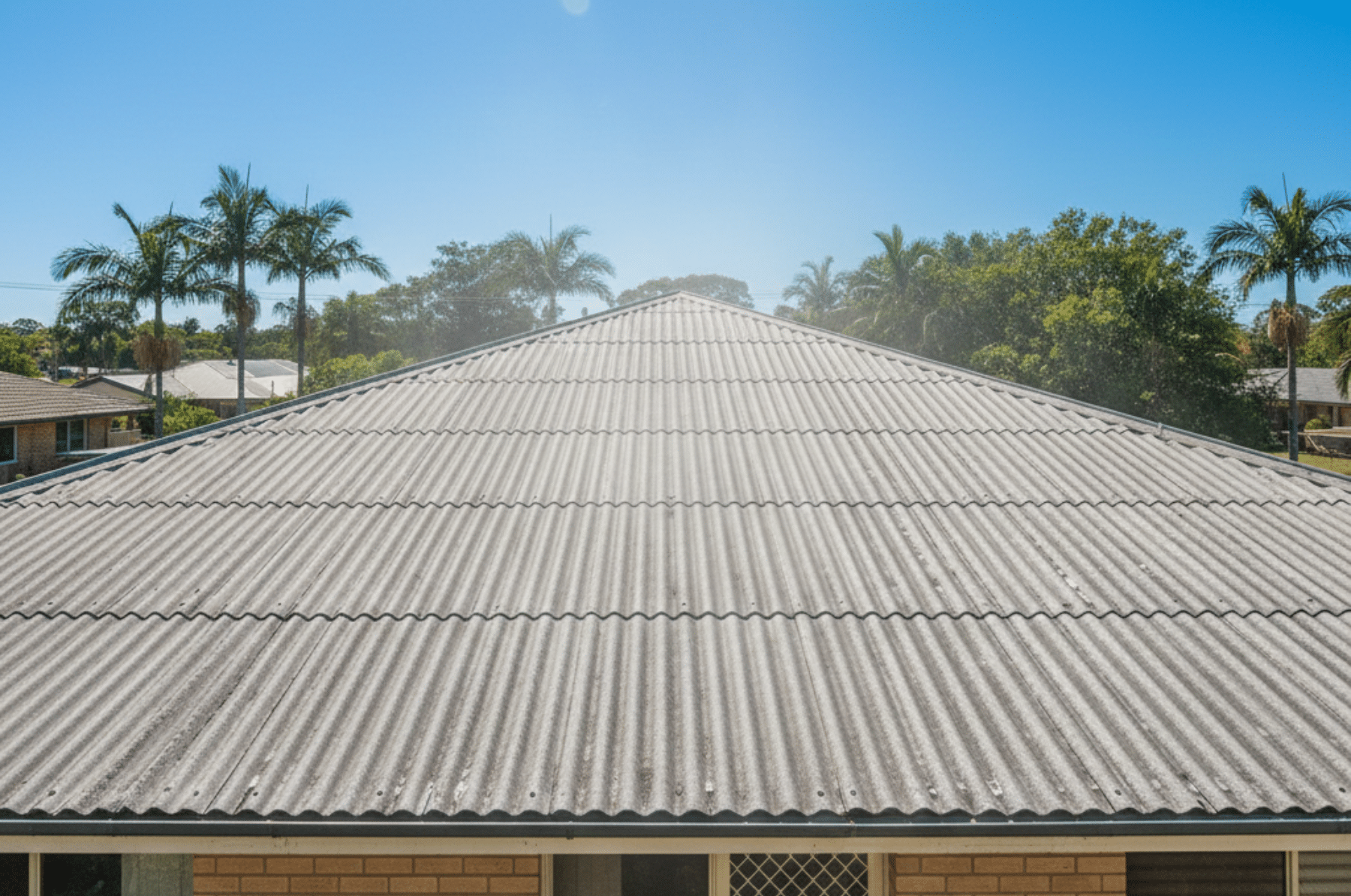
Brisbane summers are not just uncomfortable. They are destructive.
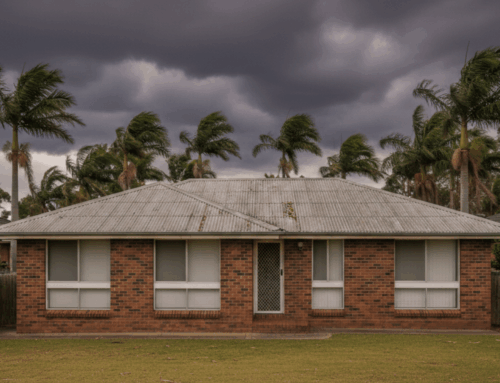
While most homeowners worry about storm damage, very few consider what extreme heat is doing to their asbestos roof every single day. February heatwaves across Brisbane regularly push temperatures above 35 degrees, with roof surface temperatures climbing much higher.
If your home still has an asbestos cement roof, that heat is silently accelerating its deterioration.
The danger is not dramatic. It is gradual, invisible, and often ignored until the damage becomes serious.
Here is what Brisbane homeowners need to understand before another heatwave hits.
February Heatwaves in Brisbane Are Accelerating Asbestos Roof Deterioration
Brisbane’s late-summer heat is relentless. Consecutive days of extreme temperatures place constant stress on roofing materials.
Asbestos cement sheets were widely installed in homes built before 1990. Many of these roofs are now decades old. They were never designed to endure today’s climate extremes year after year.
Prolonged heat exposure causes:
- Surface drying and brittleness
- Micro-fractures within the cement matrix
- Weakening around nail holes and fixings
- Loss of structural integrity
When temperatures spike repeatedly in February, deterioration speeds up. What might have taken years can now happen much faster under intense UV and thermal pressure.
If your roof is over 30 years old, heatwaves are not just uncomfortable. They are actively breaking it down.
How UV Radiation Slowly Breaks Down Asbestos Cement
Queensland experiences some of the highest UV levels in Australia. Constant ultraviolet exposure attacks the cement binder that holds asbestos fibres together.
Over time, UV radiation:
- Degrades the outer surface layer
- Causes chalking and powdering
- Weakens the bond between fibres and cement
- Makes sheets increasingly fragile
This process is gradual, which is why it often goes unnoticed. From the ground, your roof may still look intact. Up close, however, the surface can be powdery and brittle.
As the cement binder deteriorates, fibres become more vulnerable to release when disturbed by wind, rain, or impact.
The longer the roof remains exposed to harsh Brisbane sun, the more unstable it becomes.
Expansion by Day, Rapid Cooling by Night: The Cracking Cycle You Can’t See
Extreme heat during the day followed by cooler evenings creates a damaging cycle.
Asbestos cement expands in high temperatures. When the temperature drops at night, it contracts. This expansion and contraction happens repeatedly across every heatwave.
Over time, this movement leads to:
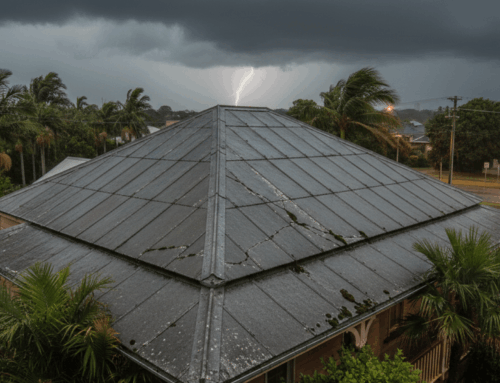
- Hairline cracks that are invisible from the ground
- Widening around fixings
- Edge splitting
- Gradual sheet warping
You may not see these cracks immediately. However, once storm season returns, those weakened sheets are far more likely to fail.
Heat damage and storm damage are closely connected. A roof weakened in summer is far more vulnerable when high winds arrive.
Why Older Fibro Roofs Fail Faster in Queensland’s Climate
Fibro asbestos roofs installed decades ago are particularly vulnerable in Brisbane’s climate.
Queensland conditions combine:
- High UV exposure
- Intense humidity
- Sudden storms
- Extreme heat cycles
Older asbestos roofing has already endured decades of environmental stress. The cement matrix has aged. Fixings may be corroded. The material is far more brittle than when first installed.
Homes built before modern building standards and asbestos bans are now reaching the point where failure risk significantly increases.
Age plus climate equals accelerated breakdown.
The Early Signs of Heat Damage Most Homeowners Miss
Heat damage is rarely obvious at first. Many homeowners only notice issues once leaks appear.
Early warning signs can include:
- Fading or chalky roof surfaces
- Small fragments in gutters
- Slight lifting at sheet edges
- Increased roof noise during temperature changes
- Fine dust in roof cavities
These signs are often dismissed as normal aging. However, they may indicate the surface is breaking down and becoming more fragile.
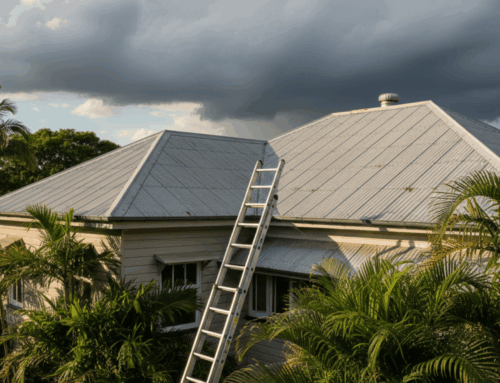
Climbing onto the roof to inspect it yourself is not recommended. Disturbing brittle asbestos sheets can increase fibre release.
A licensed inspection is the safest way to assess the condition of an aging roof.
When Heat Stress Turns Into Dangerous Airborne Fibre Exposure
Asbestos becomes dangerous when fibres are released and inhaled.
Heat alone does not instantly release fibres. The risk increases when heat-weakened sheets are later disturbed by:
- Strong winds
- Heavy rainfall
- Falling branches
- Foot traffic during maintenance
Once the cement binder deteriorates, fibres are less securely contained. Cracks and surface erosion make it easier for fibres to become airborne.
Because asbestos fibres are microscopic, you cannot see or smell them. Exposure may go completely unnoticed.
This is why proactive management is critical. Waiting until visible breakage occurs increases the likelihood that fibres have already been released.
Why Patching or Painting Over Asbestos Roofing Doesn’t Solve the Problem
Some homeowners consider painting or sealing an old asbestos roof as a temporary fix.
While coatings may improve appearance, they do not reverse structural deterioration. Paint does not strengthen brittle sheets. It does not repair internal cracks. It does not stop thermal expansion cycles.
In some cases, improper preparation before painting can actually disturb the surface and increase fibre risk.
Patching isolated cracks also fails to address widespread aging across the entire roof.
When asbestos roofing reaches the end of its lifespan, cosmetic fixes only delay the inevitable. They do not eliminate the hazard.
How a One-Day Licensed Roof Replacement Eliminates the Risk for Good
The only permanent solution to aging asbestos roofing is complete removal and replacement by licensed professionals.
ICON Asbestos Roof Replacement specialises in fully licensed asbestos roof removal and same-day roof replacement across Brisbane.
Our A Class licensed team follows strict Queensland regulations, including:
- Controlled sheet removal
- Real-time air monitoring
- Sealed waste transport
- Compliant disposal procedures
- Full clearance documentation
Once the asbestos roof is removed, we install a durable modern metal roofing system such as Colorbond or Zincalume. The entire process is often completed within one day, minimising disruption and reducing exposure risk.
This approach does not just repair the problem. It eliminates it.
Brisbane’s heatwaves are not going away. Each summer places additional stress on aging asbestos roofs across the city.
If your home was built before 1990 and still has its original roof, now is the time to act before deterioration turns into contamination.
Book a professional inspection with ICON Asbestos Roof Replacement and gain clarity on your roof’s condition. Call 0409 593 779 or request a free quote today.
Your safety, your family’s health, and your peace of mind are worth far more than another summer of silent damage.